
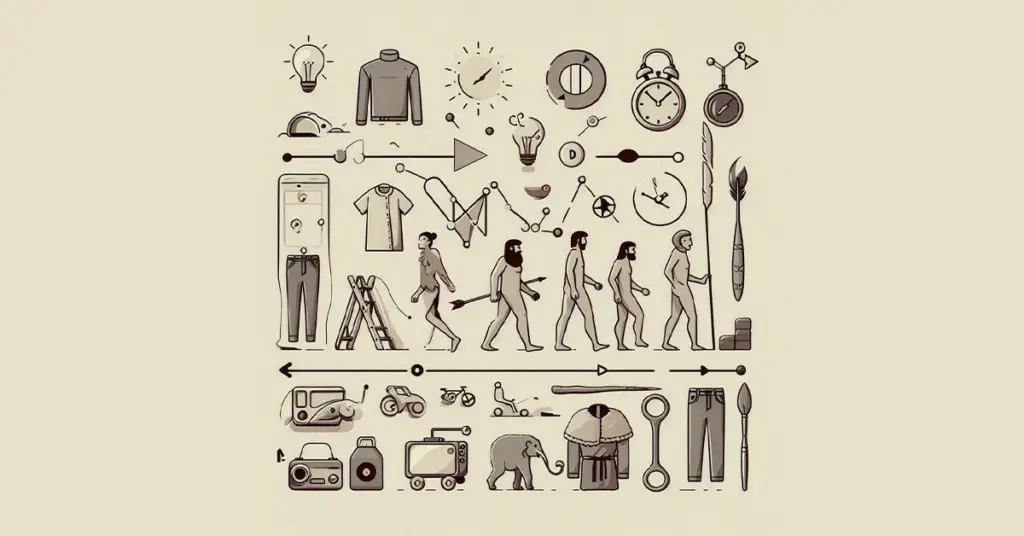
Imagine a world without clothing. No cozy sweaters on chilly mornings, no elegant dresses for special occasions, no statement sneakers to express your personality. It’s hard to picture, isn’t it? Clothing is so deeply woven into the fabric of our lives that it’s easy to take it for granted. But have you ever wondered how our ancestors went from wearing animal hides to strutting down runways in haute couture? Let’s take a journey through time and explore how clothing evolved from a basic necessity to a powerful form of self-expression.
The Birth of Clothing: Survival Meets Ingenuity
Our story begins tens of thousands of years ago, long before Instagram influencers and fashion weeks. Early humans lived in harsh environments, exposed to the elements. Clothing wasn’t about looking good—it was about survival. The first garments were likely simple coverings made from animal hides, leaves, or woven grasses. These early “outfits” served one purpose: to protect the body from cold, heat, and injury.
Archaeologists believe that the invention of sewing needles, around 40,000 years ago, was a game-changer. Suddenly, humans could stitch together pieces of hide or fabric, creating more fitted and functional clothing. This was the first step toward clothing as we know it today.
But here’s the thing: humans have always been more than just survivalists. Even in those early days, there’s evidence that our ancestors added personal touches to their clothing. Beads, shells, and dyed fabrics have been found in ancient burial sites, suggesting that clothing was already becoming a way to express identity and status.
From Function to Fashion: The Rise of Culture and Status
As human societies grew more complex, so did clothing. In ancient civilizations like Egypt, Mesopotamia, and China, clothing became a marker of social hierarchy. The wealthy wore finely woven fabrics, intricate embroidery, and vibrant colors, while the working class stuck to simpler, more practical garments. Clothing wasn’t just about covering the body anymore—it was a symbol of power, wealth, and identity.
Take, for example, the togas of ancient Rome. These flowing garments were more than just clothing; they were a statement. The way a toga was draped, the color, and the fabric all communicated the wearer’s social standing. Similarly, in medieval Europe, sumptuary laws dictated what people could wear based on their class. Only the nobility could don luxurious fabrics like silk and velvet, while peasants were restricted to wool and linen.
Fashion, in its earliest form, was about standing out—or fitting in. It was a way to say, “This is who I am, and this is where I belong.”
The Industrial Revolution: Clothing for the Masses
Fast forward to the 18th and 19th centuries, and clothing underwent another transformation. The Industrial Revolution brought mechanized textile production, making clothing more affordable and accessible than ever before. Suddenly, fashion wasn’t just for the elite. Ordinary people could experiment with styles, colors, and fabrics.
This era also saw the rise of the fashion industry as we know it. Designers like Charles Frederick Worth, often called the “father of haute couture,” began creating exclusive, custom-made garments for wealthy clients. At the same time, department stores and mail-order catalogs made trendy clothing available to the masses. Fashion became a global phenomenon, with trends spreading across continents.
The 20th Century and Beyond: Fashion as Self-Expression
The 20th century marked a turning point in the history of fashion. Clothing became a powerful tool for self-expression, rebellion, and cultural change. The flapper dresses of the 1920s challenged traditional gender norms, while the punk movement of the 1970s used ripped jeans and safety pins to make a statement. Designers like Coco Chanel, Yves Saint Laurent, and Alexander McQueen pushed boundaries, turning fashion into an art form.
Today, fashion is more diverse and inclusive than ever. Streetwear, sustainable fashion, and gender-neutral clothing are reshaping the industry. Social media has democratized fashion, allowing anyone with a smartphone to become a trendsetter. What started as a practical necessity has evolved into a global language, spoken by billions.
What Fashion Tells Us About Being Human
So, why does fashion matter? Because it’s about more than just clothes. It’s about creativity, identity, and connection. Every time we get dressed, we’re telling a story—about who we are, where we come from, and where we’re going. Whether it’s a tribal elder wearing a handwoven robe or a teenager in a vintage band tee, clothing is a way to celebrate our humanity.
Our ancestors may have started with animal hides, but they planted the seeds for something extraordinary. They showed us that clothing isn’t just about survival—it’s about thriving. It’s about taking something ordinary and turning it into art. It’s about saying, “This is me.”
So the next time you slip into your favorite outfit, take a moment to appreciate the journey it represents. From the caves of prehistoric times to the catwalks of Paris, fashion is a testament to human ingenuity, creativity, and the endless desire to express ourselves. And that’s something worth celebrating.
What’s your favorite piece of clothing, and what does it say about you? Let’s keep the conversation going—because fashion, at its core, is about connection.